Wolf Oven Manual: A Comprehensive Guide
This comprehensive guide details locating your Wolf oven’s model and serial numbers‚ understanding features‚ troubleshooting‚ and deciphering specifications – ensuring optimal performance and longevity.
Understanding Your Wolf Oven
Wolf ovens represent a significant investment in culinary excellence‚ offering precision and performance for discerning cooks. Familiarizing yourself with your specific model is crucial for maximizing its capabilities. This begins with locating the model and serial numbers‚ essential for registration‚ warranty claims‚ and accessing tailored support.
Understanding the control panel layout and various oven modes – Bake‚ Broil‚ and Convection Bake – unlocks the full potential of your appliance. Regularly consulting the complete Wolf oven manual provides detailed instructions on operation‚ cleaning‚ and maintenance‚ ensuring years of reliable service. Addressing common issues like persistent beeping or error codes promptly prevents potential problems.
Finding Your Wolf Oven Model and Serial Number
Locating your Wolf oven’s model and serial number is the first step for support‚ warranty‚ and accessing specific documentation for your appliance.
1.1 Location on Oven Door Frame
The oven door frame is a primary location for finding your Wolf oven’s crucial identification information. Typically‚ you’ll discover a sticker or a metal plate affixed to the frame when the oven door is fully opened. This plate contains both the model number and the serial number‚ essential for warranty claims‚ service requests‚ and accessing the correct user manual.
Carefully inspect the entire door frame‚ as the placement can vary slightly depending on the specific Wolf oven model. Look for a rectangular or square plate‚ often silver or white‚ with printed text. Ensure good lighting to easily read the numbers. Having these numbers readily available streamlines any interaction with Wolf’s customer support or authorized service centers.

1.2 Location on Storage Drawer Side Panel
The storage drawer‚ often found beneath the oven cavity‚ presents another common location for the Wolf oven’s identification label. To locate it‚ fully extend the storage drawer and carefully examine the side panel – either the left or right side. The model number and serial number are usually printed on a sticker or directly stamped onto the metal panel itself.
This location is particularly useful if the door frame label is missing or damaged. Again‚ ensure adequate lighting for clear visibility. The label may be discreetly placed‚ so a thorough inspection of the entire side panel is recommended. Keeping this information handy simplifies service appointments and ensures you have the correct details when contacting Wolf for assistance.
1.3 Identifying Older Model Serial Tags
Older Wolf oven models‚ particularly those from the R366 series‚ may feature serial tags in less conventional locations. These tags often differ in appearance from the newer‚ standardized labels. Locating these tags requires a more detailed search‚ as they aren’t always immediately visible.
These older models frequently have the serial tag affixed to the side wall‚ positioned near the burners. Careful inspection around both the left and right front burners is crucial. The tag itself might be a small metal plate riveted to the oven’s frame. Remember to exercise caution when inspecting these areas‚ avoiding contact with any hot surfaces or electrical components.
1.3.1 Side Wall Near Burners (R366 Models)
For R366 Wolf oven models‚ the serial tag is typically found directly on the side wall‚ adjacent to either the left front or right front burner. This placement was common in older designs‚ requiring a close visual inspection. The tag is usually a small‚ metallic plate securely fastened with rivets.
When searching‚ carefully examine the interior side panels near the burners‚ using a flashlight if necessary to illuminate the area. Be mindful of potential heat or sharp edges during your search. The serial number is crucial for identifying the specific model and accessing relevant documentation or support. Accurate identification ensures you receive the correct parts and service information.
Wolf Product Rating Plate Information
The product rating plate contains essential details‚ including the model and serial numbers‚ and the series code‚ vital for identification and service purposes.
2.1 Model Number and Serial Number Details
Locating your Wolf oven’s model and serial numbers is crucial for accessing support‚ ordering parts‚ and understanding your appliance’s specifications. The model number uniquely identifies the specific configuration of your oven‚ while the serial number provides manufacturing details and date of production.
These numbers are typically found on the product rating plate‚ often situated inside the oven door frame or on the side panel of a storage drawer. Refer to illustrations specific to your Wolf product for the exact location. Having both numbers readily available streamlines any service requests or warranty claims‚ ensuring a swift and efficient resolution to any potential issues. Accurate identification is key!
2.2 Series Code Location
The Series Code provides further refinement to your Wolf oven’s identification‚ offering insights into specific production runs or feature sets. This code is typically found directly on the product rating plate‚ working in conjunction with the model and serial numbers for complete appliance identification.
Specifically‚ the Series Code is usually printed on a sticker located underneath the model number itself. It’s a subtle detail‚ so careful examination of the rating plate is necessary. This code assists Wolf’s service and support teams in pinpointing exact specifications and ensuring compatibility when addressing any maintenance or repair needs. Knowing its location simplifies the process!
2.2.1 Underneath the Model Number
Locating the Series Code requires a focused look at the product rating plate. It isn’t prominently displayed‚ but rather subtly positioned directly underneath the printed model number. This placement ensures it’s associated with the correct appliance identification‚ avoiding any confusion.
The Series Code appears as a printed element on a sticker affixed to the rating plate. It’s a short alphanumeric sequence – for example‚ “46 51 EZ” – providing granular detail about the oven’s production specifics. This code is crucial for Wolf’s technical support‚ enabling them to accurately diagnose issues and provide tailored assistance. Remember to check carefully!
Serial Tag Variations and Locations
Wolf serial tags exhibit variations in placement‚ appearing on the left side forward of the rating plate‚ or sometimes‚ are unavailable‚ requiring alternative identification methods.
3.1 Left Side Forward of Rating Plate
Locating the serial tag on the left side‚ forward of the rating plate‚ is a common scenario for many Wolf oven models. This placement offers relatively easy access for identification purposes. Carefully inspect this area‚ as the tag may be subtly positioned.
The tag itself is typically a small‚ metallic or adhesive label containing crucial information‚ including the model and serial number. Ensure adequate lighting to clearly view the details printed on the tag.
This location is frequently documented in Wolf’s official resources and is a primary starting point for appliance identification. If the tag is absent or damaged‚ consult other potential locations or contact Wolf customer support for assistance.
3.2 No Serial Break Availability
In certain instances‚ particularly with some grill models‚ a traditional serial “break” – a clearly defined sequence for identifying production date or specific features – may not be available. This doesn’t preclude identifying the appliance‚ but requires alternative methods.
Wolf has introduced a new serial tag image specifically for grills experiencing this lack of a serial break. This updated tag format provides essential identification data despite the absence of the conventional breakdown.
Refer to the provided image of the new serial tag for grills to accurately record the model and serial number. If encountering difficulties‚ contacting Wolf’s customer support with the tag information is recommended for precise appliance details.
3.2.1 New Serial Tag Image (Grills)
The updated serial tag for Wolf grills‚ implemented when a traditional serial break is unavailable‚ features a revised layout for improved clarity. This tag prioritizes the complete serial number and model number presentation‚ ensuring accurate appliance identification.
The image showcases a rectangular tag‚ typically silver or metallic‚ displaying clearly printed text. Key information includes the “Wolf” branding‚ the full model number‚ and the complete serial number. Unlike older tags‚ it may omit specific date codes or production identifiers;
Carefully record both the model and serial numbers exactly as they appear on the tag. This information is crucial when contacting customer support or ordering replacement parts.
Appliance Identification: Sub-Zero‚ Wolf‚ and Cove
Locating model and serial numbers on Sub-Zero‚ Wolf‚ and Cove appliances is streamlined using the Model Number Tag for easy identification.
4.1 Model Number Tag Location (General)
Generally‚ the model and serial number tag for Sub-Zero‚ Wolf‚ and Cove appliances is consistently located in a readily accessible area. This tag serves as the primary source for identifying your specific appliance model. It’s typically affixed to the appliance in a location designed for easy visibility during routine checks or when contacting customer support.
The placement aims to simplify the process of obtaining crucial information about your appliance. This ensures efficient assistance with service requests‚ warranty claims‚ or simply understanding your appliance’s specifications. Referencing this tag is the first step in identifying your appliance accurately. The tag is often found on a surface that doesn’t interfere with the appliance’s operation or aesthetics.
4.2 Model Number Tag Image
The Model Number Tag‚ as pictured‚ provides essential identification details for your Sub-Zero‚ Wolf‚ or Cove appliance. This tag is your key to accessing specific information regarding your unit’s features‚ warranty‚ and available service parts. It’s crucial to have this information readily available when contacting customer support or scheduling repairs.
Visually‚ the tag typically displays the model number prominently‚ alongside the serial number. These numbers are often arranged in a clear‚ easy-to-read format. The tag’s design may vary slightly depending on the appliance type and manufacturing date‚ but the core information remains consistent. Carefully examine the image to familiarize yourself with the tag’s layout and the location of key identifiers.
Wolf Oven Features and Controls
Explore the intuitive control panel and diverse oven modes – Bake‚ Broil‚ and Convection Bake – designed for precise cooking and exceptional culinary results.
5.1 Control Panel Overview
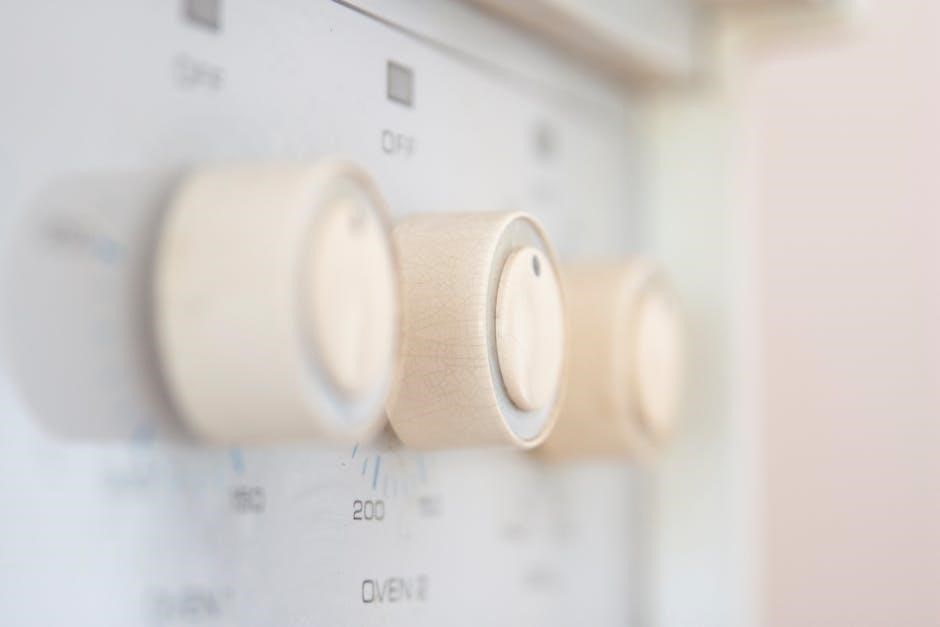
The Wolf oven control panel is engineered for intuitive operation‚ offering a seamless cooking experience. Typically‚ you’ll find a digital display showcasing temperature‚ cooking mode‚ and remaining time. Keypad buttons allow for precise temperature adjustments and mode selections.
Dedicated controls often exist for frequently used functions like preheating‚ broiling‚ and convection baking. Some models feature a touchscreen interface for enhanced control and customization. The panel also includes options for setting timers‚ utilizing delay start‚ and activating Sabbath mode.
Understanding the icons and symbols displayed is crucial for efficient operation. Refer to your specific model’s manual for a detailed explanation of each control and its corresponding function. Properly utilizing the control panel unlocks the full potential of your Wolf oven.
5.2 Understanding Oven Modes
Wolf ovens offer a variety of cooking modes designed to cater to diverse culinary needs. Bake mode provides consistent heat from the bottom element‚ ideal for cakes‚ cookies‚ and casseroles. Broil mode utilizes intense radiant heat from above‚ perfect for searing and browning.
Convection Bake mode circulates hot air throughout the oven‚ ensuring even cooking and faster results – excellent for roasting and multiple-rack baking. Additional modes may include convection roast‚ proof‚ and warm.
Each mode optimizes temperature and airflow for specific dishes. Experimenting with different modes allows you to achieve professional-quality results. Consult your oven’s manual for detailed descriptions and recommended uses for each available cooking mode‚ maximizing your culinary capabilities.
5.2.1 Bake Mode
Bake mode on your Wolf oven delivers traditional‚ even heating‚ making it the workhorse for everyday cooking. Heat originates solely from the bottom element‚ creating a gentle and consistent temperature throughout the oven cavity. This is ideal for baked goods like cakes‚ cookies‚ breads‚ and casseroles where even rising and thorough cooking are crucial.
For optimal results‚ position your dishes in the center of the oven. Preheating is recommended to ensure accurate temperature control. Bake mode is generally used for temperatures between 200°F and 450°F. Avoid opening the oven door frequently during baking to maintain consistent heat and prevent temperature fluctuations.
5.2.2 Broil Mode
Broil mode on your Wolf oven utilizes the top heating element to deliver intense‚ direct heat‚ perfect for quickly browning‚ searing‚ and finishing dishes. It’s excellent for achieving a crispy surface on meats‚ melting cheese‚ or toasting. Wolf ovens often offer two broil settings: standard and infrared.
When broiling‚ position the oven rack closer to the top element for faster‚ more intense browning. Always use broil-safe cookware. Monitor food closely‚ as broiling happens rapidly‚ and can quickly burn. Leaving the oven door slightly ajar during broiling can help regulate temperature and prevent excessive smoking‚ depending on your model.
5.2.3 Convection Bake Mode
Convection Bake mode employs a fan to circulate hot air evenly throughout the oven cavity‚ resulting in faster and more uniform cooking. This is ideal for baking multiple trays of cookies‚ roasting meats‚ or achieving a golden-brown finish on casseroles. Wolf convection systems are designed for consistent results.
When using convection bake‚ you may need to reduce the baking temperature by 25°F compared to standard bake mode‚ and potentially shorten the cooking time. Experimentation is key to mastering convection baking with your specific Wolf oven. Ensure proper air circulation by not overcrowding the oven racks.
Troubleshooting Common Issues
Addressing typical problems like persistent beeping or encountering error codes is crucial for maintaining your Wolf oven’s functionality and ensuring seamless operation.
6.1 Persistent Beeping
A continuous beeping sound emanating from your Wolf oven often signals an active function or a potential issue requiring attention. Initially‚ verify that no timers are running‚ as an active timer is a common cause for the beeping. If the beeping persists even after checking timers‚ consult the oven’s display panel for any illuminated error codes.
These codes provide specific insights into the problem. Refer to the error code section within this manual to decipher the meaning of the code and the recommended course of action. If no error code is displayed‚ a brief power cycle – turning the oven off and then on again – might resolve the issue. However‚ if the beeping continues unabated‚ professional service may be necessary to diagnose and rectify the underlying cause.
6.2 Error Codes and Meanings
Wolf ovens utilize error codes to communicate specific malfunctions‚ aiding in efficient troubleshooting. These codes appear on the oven’s display panel and require referencing a dedicated chart for interpretation. Common codes might indicate issues with temperature sensors‚ igniters (for gas models)‚ heating elements (for electric models)‚ or control board malfunctions.
Consult the complete error code list in the appendix of this manual‚ or on the Wolf website‚ to pinpoint the exact problem. Each code is accompanied by a description of the fault and suggested remedies‚ ranging from simple resets to professional service calls. Ignoring error codes can lead to further damage‚ so prompt attention is crucial for maintaining oven functionality and safety.
Wolf Oven Specifications and Codes
Understanding Wolf’s specification codes – IR‚ SRT‚ LP‚ G‚ and DG – is vital for identifying range types‚ fuel sources‚ and griddle configurations for service or parts.
7.1 Induction Range (IR)
The “IR” designation specifically identifies Wolf induction ranges. These models utilize electromagnetic energy to directly heat cookware‚ offering precise temperature control and rapid heating capabilities. Induction ranges are known for their efficiency and safety features‚ as the cooktop surface remains relatively cool to the touch.
When referencing service documentation or ordering replacement parts‚ accurately noting the “IR” code is crucial. This ensures compatibility and avoids potential issues. Wolf induction ranges often incorporate advanced features like bridge elements and precise simmer settings. Identifying an “IR” model allows technicians and owners to access specific resources tailored to this technology. Proper maintenance and understanding of the induction system are key to maximizing the range’s lifespan and performance.
7.2 Sealed Burner Rangetop (SRT)
The “SRT” code designates Wolf sealed burner rangetops‚ a classic and reliable cooking solution. These rangetops feature burners with sealed designs‚ preventing spills and debris from entering the burner assembly. This design contributes to easier cleaning and consistent burner performance. Wolf SRT models are celebrated for their robust construction and even heat distribution.
Accurately identifying an SRT model is vital when seeking service or replacement parts. The sealed burner design requires specific components‚ and using incorrect parts can compromise functionality. These rangetops often include features like dual-stacked burners for high-heat searing and precise simmer control. Maintaining the cleanliness of the sealed burners is essential for optimal operation and longevity of the rangetop.
7.3 Fuel Type Codes (LP)
The “LP” code signifies that your Wolf appliance is designed to operate on Liquid Propane gas. Understanding this designation is crucial for ensuring correct gas supply and safe operation. Wolf appliances manufactured for LP use require specific regulators and orifices optimized for propane’s different pressure characteristics compared to natural gas.
Incorrect fuel type usage can lead to inefficient combustion‚ potential safety hazards‚ and voided warranties. Always verify the fuel type code on the appliance’s rating plate before connecting to a gas supply. Conversion between natural gas and LP requires professional installation of a conversion kit and adjustment by a qualified technician. Proper LP tank installation and maintenance are also vital for safe and reliable performance.
7.3.1 Liquid Propane
Liquid Propane (LP)‚ as a fuel source for your Wolf appliance‚ demands specific handling and safety precautions. LP gas is heavier than air‚ meaning any leaks will settle near the floor‚ increasing the risk of ignition. Regular leak checks with a soapy water solution around connections are essential. Ensure proper ventilation in the appliance area to prevent gas accumulation.
LP tanks require professional installation‚ regular inspection‚ and adherence to local codes. Never attempt to repair or modify LP tank components yourself. Always use a qualified technician for any LP gas system work. Proper tank filling levels and valve operation are critical for safe and efficient operation. Familiarize yourself with LP gas safety guidelines for a worry-free experience.
7.4 Griddle and Double Griddle (G‚ DG)
Wolf griddles (G) and double griddles (DG) offer versatile cooking surfaces for pancakes‚ burgers‚ and more. These models feature precise temperature control and durable construction for consistent results. Proper seasoning is crucial for a non-stick surface; follow the manufacturer’s instructions for initial seasoning and maintenance. Regular cleaning after each use prevents buildup and ensures optimal performance.
DG models provide expanded cooking capacity‚ ideal for larger families or entertaining. Always use appropriate utensils to avoid scratching the griddle surface. Avoid abrasive cleaners‚ opting for mild soap and water. Inspect griddle components regularly for wear and tear‚ replacing as needed. Refer to the full manual for detailed cleaning and maintenance procedures.